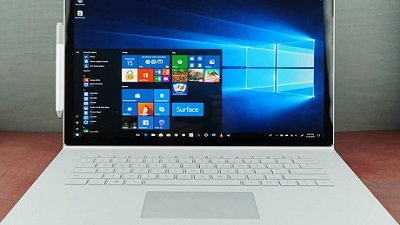
 The major and monthly updates to Windows 10 can be a headache for some people. From the infamous blue screen of death errors, installation issues, reduced performance, and data deletion bugs, installing Windows update isn’t a seamless process for everyone. Windows 10 KB4540673 is the latest update and it was released on March 10 with security fixes. The March Patch Tuesday update is a low-key release and there are not too many changes, but it appears that the patch is still causing a series of problems for some people. The most recent cumulative update for the Windows 10 version 1909 and 1903 is causing the blue screen of death on some devices, according to user reports. Only a small subset of consumers appear to be impacted, but the number of reports is growing. Concerns over Windows 10 KB4540673 cumulative updates were documented in our comments section and other forums. “After installing it I started having BSOD every time I started my PC. The only solution I had was rolling back to a previous restore point of some days ago.,” explained the post author in our comments. “This March update installed automatically on my devices and it leads to BSOD errors on my gaming PC and my work laptop,” another user wrote. These user reports suggest that the issue is only due to compatibility issues with KB4540673. As we noted, consumers in other forums also reported seeing the issue with Windows 10’s newest patch. A discussion on Reddit also confirms the issue happens on some devices. For example, as one Redditor notes: “Not sure if this is the same problem given mine auto-updated to KB4540673 (not KB4535996), but after the update, my desktop PC was hanging on the BIOS/UEFI loading screen. I couldn’t get past POST to even attempt booting into Windows or Safe Mode”. “Installed KB4540673 today got a blue screen while playing CS: GO,” another user noted. “In all fairness, as annoyed as I am that my laptop is completely crashed right now over this update,” one poster noted in Microsoft’s forums. Some users have also claimed that this update could take a really long time to install, while others have reported installation issues. “It doesn’t install here. It restarts and says that the update wasn’t installed,” a reader told us. “I have the same issue. Only mine doesn’t go far as 1% and it won’t allow the other updates to download so I really don’t know what to do. Like I’ve had my PC opened all day and is still 1% not gone up at all,” a user wrote. One user also claimed that this patch once again causes a temporary user profile bug. It is worth noting that only a subset of users with unknown PC configuration reported these problems and it’s unclear just how widespread this issue is. For more refer to OUR FORUM.  Multiple sources familiar with the Entertainment Software Association (ESA)'s plans have confirmed to Ars Technica that the organization, which is responsible for the annual Electronic Entertainment Expo (E3), will soon cancel the three-day expo. Like in prior years, E3 2020 was scheduled to play out in early June as a three-day event at the Los Angeles Convention Center. Shortly after we received the tip, indie game publisher Devolver Digital posted a brief, ominous message on Twitter: "Cancel your E3 flights and hotels, y'all." The ESA had not made any announcements about E3 2020 at that time. One source who spoke to Ars on background said they'd heard the news of E3 2020's cancellation "directly from ESA members" and that an official, public statement on the matter "was supposed to be today [Tuesday, March 10] and slipped." Representatives for the ESA did not immediately respond to Ars Technica's questions about the state of E3 going forward or whether the event's seismic shift may instead mean a delay, a move to a completely different venue, or a wholly virtualized, live-streamed event. Exactly why the event will be canceled is not clear at this time. Late last month, the ESA addressed concerns about the spread of coronavirus and its impact on major 2020 expos around the world by insisting that it "continue[d] to plan for a safe and successful E3" while otherwise "monitoring and evaluating" its potential impact on events held in Los Angeles. Following that announcement, E3's contracted creative directors, the merchandise and events company iam8bit, resigned from its post after five weeks on the job. That news followed a February announcement that longtime E3 collaborator Geoff Keighley would not be participating in this year's expo. More so than the organizers and headlines, E3 has always been about the games—but even that fact has been a sore spot, as E3 has seen major game publishers bow out in recent years. Activision-Blizzard became an unreliable attendee starting in 2016. EA officially ditched E3 in 2016 to operate EA Play, a standalone event timed alongside E3, on an annual basis ever since. While Nintendo has regularly had a major booth on the E3 show floor, the company hasn't hosted an E3 keynote event for some time, choosing instead to host pre-filmed Nintendo Direct presentations on YouTube. Sony's absence in 2019 was considered particularly major, given that it's the producer of the world's best-selling home gaming console, and its E3 2020 no-show seemed even more glaring in comparison, thanks to a new PlayStation 5 console expected to launch later this year. Follow any Conference Cancellations by visiting OUR Forum.  A hot potato: Intel's largely undocumented master controller for its CPUs has a vulnerability that cannot be fixed, and is so severe that it can allow malicious actors to bypass storage encryption, copyrighted content protections, and take control of hardware sensors in IoT devices. Security researchers have discovered that a new vulnerability present in Intel chips that have been released over the last five years is unfixable outside of replacing the hardware that's currently being used in millions of commercial and enterprise systems. Specifically, this has to do with the Converged Security and Management Engine, which is essentially a tiny computer within your computer that has full access to all data that flows through your PC, from internal components to peripherals. Intel has guarded the secrets of how this engine works in an effort to prevent competitors from copying it, but that hasn't prevented security experts from trying to crack their way in to see if it can be exploited by malicious actors. The unfixable flaw was discovered by Positive Technologies, who says it's a firmware error that's hard-coded in the Mask ROM of Intel CPUs and chipsets. The problem is that Intel's CSME is also responsible for several security features, including the cryptographic protections for Secure Boot, digital rights management, and Enhanced Privacy ID (EPID). It also houses the Trusted Platform Module (TPM) that allows the OS and apps to store and manage keys for things like file system encryption. Researchers explained that hackers can exploit a firmware error in the hardware key generation mechanism that allows them to take control of code execution. They noted that "when this happens, utter chaos will reign. Hardware IDs will be forged, digital content will be extracted, and data from encrypted hard disks will be decrypted."The only recent platform immune to the problem is Intel's 10th generation, Ice Point chipsets and SoCs. However, the good news is that the attack method described by Positive Technology is rather difficult to achieve without other factors at play, such as direct physical access to the hardware in question. This isn't the first time someone has managed to crack open Intel's ME subsystem. Security researchers uncovered other vulnerabilities in Intel's hardware in 2017 and 2018, not to mention the Spectre-style one from 2019 and the recently disclosed CacheOut attack, but at least those are fixable. Stay on top of the by visiting OUR FORUM. |
Latest Articles
|