 Microsoft yesterday released a new Windows 10 build 17704 for Insiders in the Fast and Skip Ahead Ring. The latest build has been pushed out with many new features along with improvements and bug fixes. With the Redstone 5 build, Microsoft introduced the much-needed auto brightness feature for Videos. Windows 10 users need not adjust their video brightness settings manually anymore when watching a video outside. The new feature automatically adjusts the video brightness depending on the light. It works on similar lines to the auto brightness feature on Windows 10 Mobile. The feature uses the light sensor in the device to control the light surrounding the device and adjust the video brightness accordingly to improve the image quality and let user view images or objects on the screen even in direct sunlight. Microsoft says: “There’s a new viewing mode for you to try out, designed to improve the visibility of your video when you are in a very bright environment. This feature uses the light sensor on your device to detect your ambient light and automatically adjusts your video accordingly,”. More details are posted on OUR FORUM. 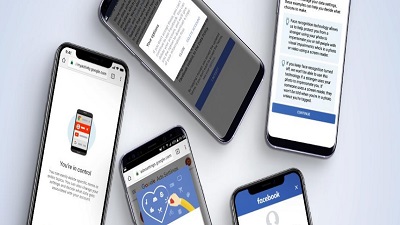 Despite the new GDPR regulation entering into effect across Europe, Facebook and Google are manipulating users into sharing personal data by leveraging misleading wording and confusing interfaces, according to a report released today by the Norwegian Consumer Council (NCC). In its 44-page report, the Norwegian agency accuses Google and Facebook of using so-called "dark patterns" user interface elements into "nudging" users towards accepting privacy options. These dark patterns include misleading privacy-intrusive default settings, misleading wording, giving users an illusion of control, hiding away privacy-friendly choices, take-it-or-leave-it choices, and choice architectures where choosing the privacy-friendly option requires more effort for the users. Google and Facebook making users work for their privacy. "Facebook and Google have privacy-intrusive defaults, where users who want the privacy-friendly option have to go through a significantly longer process," the NCC says. "They even obscure some of these settings so that the user cannot know that the more privacy intrusive option was preselected. "Choices are worded to compel users to make certain choices, while key information is omitted or downplayed," the NCC says in its report. Complete details can be found on OUR FORUM.  On Monday, the Wi-Fi Alliance, the organization that manages Wi-Fi technologies, announced the official release of WPA3. WPA3 is the latest version of Wi-Fi Protected Access (WPA), a user authentication technology for Wi-Fi connections. News that the Wi-Fi Alliance was working on WPA3 leaked online in January. The organization started working on WPA3 after a security researcher revealed KRACK, a vulnerability in the WPA2 WiFi protocol that made it somewhat trivial for an attacker to gain access to WiFi transmissions protected by WPA2. WPA3 is currently optional for all newly produced devices, but it will become the de-facto Wi-Fi authentication standard for all Wi-Fi capable devices in the coming years. A date has not been set yet, but the new WPA3 will retain interoperability with older WPA2 devices to ensure as less friction as possible during the transition to WPA3. WPA3-Personal and WPA3-Enterprise are just like WPA1 and WPA2 before it, there are two WPA3 "security modes" —WPA3-Personal and WPA3-Enterprise. The main difference between these two security modes is in the authentication stage. WPA3 uses the Simultaneous Authentication of Equals (SAE) algorithm, which replaces Pre-shared Key (PSK) in WPA2-Personal, while WPA3-Enterprise uses a more complex set of features that replace IEEE 802.1X from WPA2-Enterprise. Follow the link to OUR FORUM for more. |
Latest Articles
|