 The holiday shopping season is in full swing, with Black Friday and Cyber Monday just around the corner, and scammers have been getting ready to cash in from their fraud campaigns. While some fraudsters target the online landscape fooling shoppers with lookalike domains, others focus on customers of brick and mortar retail stores. The latter take advantage of the flood of legitimate discounts to trick potential victims into giving information that could be used for attacks all year round. Researchers at ZeroFOX combed the internet for holiday-themed fraud campaigns and found more than 60,000 potential scams, most of them aimed at consumers in the market for regular products that do not fit the luxury category. The cybersecurity company noticed that the scammers attracted victims with the promise of gift cards, giveaways, discounts, or coupons. Since user data was the coveted prize, all cybercriminals had to do was create an appealing post directing victims to malicious websites. According to ZeroFOX, this type of post is likely advertised found on social media and digital platforms. The link in the post above leads to a landing page with multiple fake giveaways. The poor design of the page should serve as a warning, and so should the request to input personal information such as phone number, gender, date of birth, and street address. Most of the keywords likely to lead to a retail scam that was noticed by the researchers during their study are related to gift-giving. However, posts from unknown accounts on social media that contain 'holiday,' 'Christmas,' 'Thanksgiving' or Black Friday and Cyber Monday should also be regarded with suspicion. ZeroFOX says that the fraudulent domains they found can be spotted as they typically combine specific keywords ('login,' 'verify,' 'free,' 'deal,' 'verification,' 'coupon') with a call to action like logging in or verifying an account to continue. Some of the words The researchers note that they did not check all the domains that came up during their search but the probability of them serving content is high since they all had a TLS certificate, which requires extra effort. A small sample of the websites was verified, though, and the results were expected: phishing, giveaway/coupon scams, and some dubious Chrome extensions. For more turn to OUR FORUM. 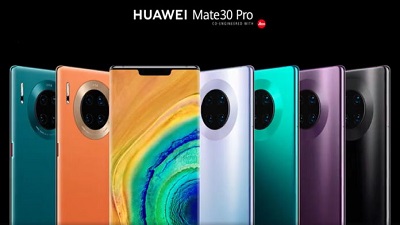 Huawei is the company you can’t write off. Sure, it has problems with the U.S. government and its latest phone, the Huawei Mate 30 Pro, is still awaiting a wide release outside China, but it still manages to achieve surprising things. Huawei is the company you can’t write off. Sure, it has problems with the U.S. government and its latest phone, the Huawei Mate 30 Pro, is still awaiting a wide release outside China, but it still manages to achieve surprising things. The Huawei Mate 20 X, a huge phone with a whopping 7.2in display, most recently updated to a 5G version, has beaten every other phone tested in this way by DXOMark. The company said that the Huawei phone was released as a multimedia powerhouse, and it praised the phone extensively, comparing it favorably to phones including the latest Apple flagship, the iPhone 11 Pro Max. It is also the only Android phone we’ve tested that scored above Apple’s large-screen iPhone XS Max—although only by one point. The Mate 20 X did particularly well when playing back movies and music, achieving a substantially higher score for those use cases than any of the other phones we have tested. Okay, so it’s only just better than the latest iPhone, just one point, but it pretty conclusively beats the Samsung Galaxy S10+. So, what does that mean? Well, for a start, it confirms that Huawei phones are increasingly well-crafted and offer genuine standouts. But perhaps it also shows Huawei to be ahead of the curve. Audio quality is only just becoming a thing, though several phone manufacturers, such as Nokia, for instance, have been boasting of their handsets’ sound capabilities for some time. But with bigger screens, designed to let you watch the video and play games, better audio becomes increasingly important. Huawei’s skill is that as it improves the camera, screen, battery life and innovation levels on its phones, it’s not neglecting any part of the package, recognizing audio as an aspect that needs careful attention, too. Be sure and read more at OUR FORUM.  Huawei is one of China’s biggest consumer electronics companies with a wide range of mobile and laptop products. That company has had to pull out of the U.S. market as a result of the USA’s trade war with China. However, that trade war has been easing in recent months. Now Microsoft has confirmed the U.S. Department of Commerce has accepted the big M’s request to resume exporting mass-market software to Huawei. Earlier in 2019, the Americans placed Huawei on the Entity List. That is a list of companies that the U.S. considers a national security threat. The Americans placed Huawei on that list largely due to concerns that the company was assisting Chinese espionage. As a consequence, the Trump administration effectively blocked Microsoft and other U.S. companies selling products and tech to Huawei. Under such circumstances, Huawei has had to withdraw from the U.S. market and postpone the release of Windows laptops. Furthermore, Huawei has had to look toward alternative non-Microsoft platforms for its laptops, such as Deepin Linux. However, the USA and China have resumed trade talks since August 2019 as the trade war has become increasingly detrimental. The U.S. relies a lot on Chinese manufacturing, and China’s companies need America’s biggest software (primarily Android and Windows). With the trade war easing, Microsoft requested a license to sell mass-market software to Huawei. The big M confirmed the Department of Commerce has accepted the request as follows: On Nov. 20, the U.S. Department of Commerce granted Microsoft’s request for a license to export mass-market software to Huawei. It remains somewhat unclear what mass-market software actually amounts to. However, it might mean that Microsoft can resume Windows OS exports to Huawei. If so, Huawei’s Windows laptops might become broadly available again (especially in the MS Store). Stay updated on Huawei and more by visiting OUR FORUM. |
Latest Articles
|