 A newly uncovered form of ransomware is going after Windows and Linux systems in what appears to be a targeted campaign. Named Tycoon after references in the code, this ransomware has been active since December 2019 and looks to be the work of cybercriminals who are highly selective in their targeting. The malware also uses an uncommon deployment technique that helps stay hidden on compromised networks. The main targets of Tycoon are organizations in the education and software industries. Tycoon has been uncovered and detailed by researchers at BlackBerry working with security analysts at KPMG. It's an unusual form of ransomware because it's written in Java, deployed as a trojanized Java Runtime Environment, and is compiled in a Java image file (Jimage) to hide the malicious intentions. "These are both unique methods. Java is very seldom used to write endpoint malware because it requires the Java Runtime Environment to be able to run the code. Image files are rarely used for malware attacks," Eric Milam, VP for research and intelligence at BlackBerry, told ZDNet. "Attackers are shifting towards uncommon programming languages and obscure data formats. Here, the attackers did not need to obscure their code but were nonetheless successful in accomplishing their goals," he added. However, the first stage of Tycoon ransomware attacks is less uncommon, with the initial intrusion coming via insecure internet-facing RDP servers. This is a common attack vector for malware campaigns and it often exploits servers with weak or previously compromised passwords. Once inside the network, the attackers maintain persistence by using Image File Execution Options (IFEO) injection settings that more often provide developers with the ability to debug software. The attackers also use privileges to disable anti-malware software using ProcessHacker in order to stop the removal of their attack. "Ransomware can be implemented in high-level languages such as Java with no obfuscation and executed in unexpected ways," said Milam. After execution, the ransomware encrypts the network with files encrypted by Tycoon given extensions including .redrum, .grinch, and .thanos – and the attackers demand a ransom in exchange for the decryption key. The attackers ask for payment in bitcoin and claim the price depends on how quickly the victim gets in touch via email. Get better informed by visiting OUR FORUM.
 A Chinese threat actor has developed new capabilities to target air-gapped systems in an attempt to exfiltrate sensitive data for espionage, according to a newly published research by Kaspersky yesterday. The APT, known as Cycldek, Goblin Panda, or Conimes, employs an extensive toolset for lateral movement and information stealing in victim networks, including previously unreported custom tools, tactics, and procedures in attacks against government agencies in Vietnam, Thailand, and Laos. "One of the newly revealed tools is named USBCulprit and has been found to rely on USB media in order to exfiltrate victim data," Kaspersky said. "This may suggest Cycldek is trying to reach air-gapped networks in victim environments or relies on physical presence for the same purpose." First observed by CrowdStrike in 2013, Cycldek has a long history of singling out defense, energy, and government sectors in Southeast Asia, particularly Vietnam, using decoy documents that exploit known vulnerabilities (e.g., CVE-2012-0158, CVE-2017-11882, CVE-2018-0802) in Microsoft Office to drop a malware called NewCore RAT. Kaspersky's analysis of NewCore revealed two different variants (named BlueCore and RedCore) centered around two clusters of activity, with similarities in both code and infrastructure, but also contain features that are exclusive to RedCore — namely a keylogger and an RDP logger that captures details about users connected to a system via RDP. "Each cluster of activity had a different geographical focus," the researchers said. "The operators behind the BlueCore cluster invested most of their efforts on Vietnamese targets with several outliers in Laos and Thailand, while the operators of the RedCore cluster started out with a focus on Vietnam and diverted to Laos by the end of 2018." Both BlueCore and RedCore implants, in turn, downloaded a variety of additional tools to facilitate lateral movement (HDoor) and extract information (JsonCookies and ChromePass) from compromised systems. What's more, the malware is programmed to copy itself selectively to certain removable drives so it can move laterally to other air-gapped systems each time an infected USB drive is inserted into another machine. A telemetry analysis by Kaspersky found that the first instance of the binary dates all the way back to 2014, with the latest samples recorded at the end of last year. The initial infection mechanism relies on leveraging malicious binaries that mimic legitimate antivirus components to load USBCulprit in what's called DLL search order hijacking before it proceeds to collect the relevant information, save it in the form of an encrypted RAR archive, and exfiltrate the data to a connected removable device. Visit OUR FORUM to learn more.
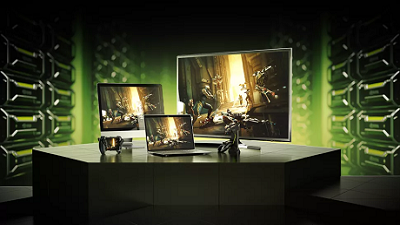 If you're an Nvidia GeForce Now Founder's subscriber, it's likely you're nonplussed over the continued losses to the cloud gaming service's roster. Many notable videogames and publishers have dropped from the service since it launched on February 4, 2020—apparently those holding all the cards are "still figuring out their cloud strategies"—and if that isn't a bad omen of things to come, I don't know what is. Why? Because Nvidia's service offers something akin to the PC gaming experience. It is (theoretically) open to all, it allows you to access the games you already own, and it is more or less a back to basics promise of a half-decent gaming PC in the cloud—it even offers RTX graphics for cheap. Without it, or those other services like it, the future of cloud gaming looks a lot more… exclusive. Nvidia was unlucky in its game streaming rollout. Just as the ball started rolling on its initially successful cloud gaming ambitions, and fresh out of beta, a couple of major publishers (Activision Blizzard, Bethesda Softworks, 2K Games) swiftly dropped out from the service, and even made quite a palaver out of it. It appears as though that sentiment only gained momentum from there. Further games have been pulled from the service since, and while many more have embraced it with open arms, there are some huge games notably missing from its cloud-compatible library. Nvidia's since adopted a less pro-active opt-in approach for developers and publishers on GeForce Now as a result. So what is it that makes Nvidia's service so frowned upon by publishers? I'd have to guess that it's merely the sheer size, scale, and monetary worth of the potential 'platform'. No one batted an eyelid for the many cloud streaming services that came before, despite being much like Nvidia GeForce Now—those that allow a user to hook in their existing libraries and play the games they own across a range of digital storefronts on hardware they couldn't otherwise afford or access. So you'd expect that it wouldn't matter whether you play your game on the hardware you own—a trusty gaming PC—or one that's rented to you and served up out of a server rack. You bought the game, right? That's yours and you get to say how you play it. Well, not so fast. Gaming licenses have never been straightforward. Do you own a game or a license to the game? Well, the answer is actually relatively simple: you own a license that allows you to use someone's software, as they intended. What that End User License Agreement (EULA) means for you, and what you're allowed to do and not allowed to do with it (such as modding), varies between platform and developer. Therein lies the thorn in Nvidia's side, and the stipulation that gives ultimate control to the publisher. And it's only a microcosm of a wider issue—if cloud gaming inherently relies on publishers and developers to specifically allow access to the videogames we own a license to, then it's going to run into burgeoning costs, exclusivity, and a lack of interest from gamers with access to an already fairly simple solution that (mostly) bypasses these issues: a physical gaming PC. For more please visit OUR FORUM. |
Latest Articles
|